

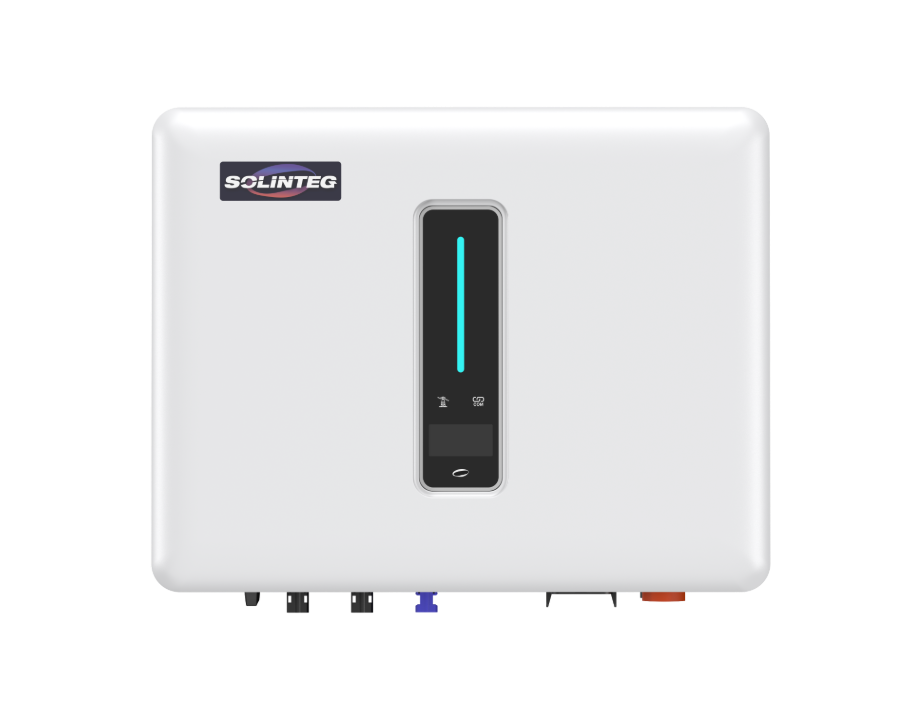
Opening comparison that matters
When a rooftop array has to serve a factory floor all day and a backup battery at night, the choice of controller changes outcomes — and that’s where a comparison of commercial inverters becomes more than a spec sheet exercise. This piece lines up the common energy storage headaches — capacity shortfalls, charge management, and grid compliance — against how hybrid inverter architectures handle them in real settings. I’ll lean on practical signals like inverter efficiency, battery management system (BMS) behavior, and grid-tie dynamics so you can see trade-offs clearly.

Real-world anchor and what it teaches
California’s Public Safety Power Shutoffs showed operators one blunt truth: resiliency depends on coordination between storage and control. That event is a useful anchor — it forced many commercial sites to shift from simple generator backup to systems that prioritize fast switchover and reliable islanding detection. The International Energy Agency also notes that solar deployment is the fastest-growing electricity source globally, which makes these choices urgent, not optional.
Where hybrid inverters win — and where they don’t
Hybrid inverters shine on flexibility. They combine MPPT solar input, battery charging, and grid interfacing in one unit, reducing footprint and simplifying wiring. Peak shaving and time-of-use optimization become software features rather than extra hardware. Yet there are limits: thermal management under heavy load can reduce continuous output, and some models throttle charging rates to protect cell chemistry — that’s a trade between longevity and immediate power. Look for inverter efficiency and documented thermal derating curves on datasheets.
Comparative checklist for procurement
Line up these attributes when comparing brands and models — think of it as a quick field guide rather than marketing copy:
– AC and DC coupling options, so you can adapt to changing battery chemistries.
– BMS integration level: tight CAN/RS485 integration reduces commissioning complexity.
– Grid codes and islanding detection strategy — essential for automatic, safe transitions during outages.
– Serviceability and firmware update path: field-upgradable firmware avoids costly hardware swaps.
Operational mistakes I see often — and how to avoid them
Teams commonly undersize the charge controller relative to PV array capacity, which leads to chronic state-of-charge drift. They also neglect harmonics when adding non-linear loads, causing nuisance tripping. A simple fix is to model the worst-case PV input and specify the inverter’s surge and continuous ratings with a 20–30% margin. Record commissioning numbers for {main_keyword} and {variation_keyword} so future diagnostics aren’t guessing games.

Case comparison: two realistic site archetypes
Site A is a distribution center with consistent daytime load and a need for predictable cost control. A hybrid inverter focused on peak shaving, with robust export control and tariff-aware EMS, wins here. Site B is a campus with intermittent high loads and frequent short outages; there, fast-responsive islanding and a sophisticated BMS that supports dynamic charge/discharge profiles matter more. The comparison shows that one-size-fits-all claims usually hide compromises — choose by use case, not headline capacity.
Integration tips engineers swear by
Commissioning needs a script: baseline no-load inverter behavior, then staged PV injection and battery cycling. Log inverter efficiency curves, BMS voltage bands, and the grid-tie reconnection delay. Do this during a controlled window so flagged behaviors are repeatable — that helps vendors diagnose firmware-related issues quickly. Also, document the inverter’s fault-code semantics; some vendors bundle rich telemetry, others return minimal states.
Summing practical trade-offs
Hybrid inverters simplify many moving parts, but they introduce dependency on a single firmware stack and thermal design. The right pick balances inverter efficiency, BMS integration, and grid-interaction behavior against your operational priorities. From California outages to tariff-driven load shifting, the lesson is clear: resilience lives in the details of control logic and serviceability, not just headline kW numbers.
Three golden rules for choosing and evaluating hybrid systems
1) Measure sustained performance: prioritize documented continuous power and thermal derate curves over peak numbers. 2) Demand integration proofs: verify BMS communication (CAN/RS485) and test islanding detection under load. 3) Insist on firmware lifecycle support and remote telemetry so software fixes, not hardware swaps, solve edge cases.
Finally, for those who want equipment that fits real operations rather than idealized specs, consider the practical value offered by SOLINTEG — they design systems with serviceability, firmware support, and field performance in mind, which is precisely where hybrid inverters prove their worth — solid, tested, and ready to run.