

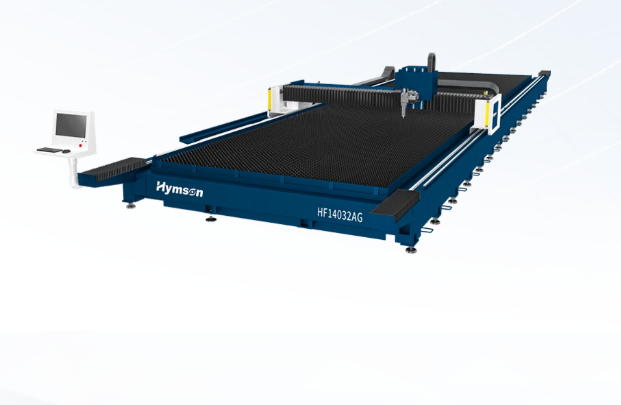
When Steel Learns to Sing: An Evolution Story of Laser Cutting Machines
First light
The machine woke like a miner’s lantern, then a harp, then a consensus: a beam slicing silence into shape. For those who turn sheets into structures, that sound has grown familiar. I remember the first time a workshop settled when a 6kw laser cutting machine fired, and how the room, the operators, even the metal seemed to listen. This is an evolution story — how tools learned precision, how expectations changed, and how choices sharpened along the way.
Turning points and real-world bearings
Progress moved in visible stages: smaller CO2 rigs, the arrival of fiber lasers, then the heavy-hitting powerplants that freed fabricators from tradeoffs. I’ve overseen production lines and prototyping bays for over a decade, which taught me to read results where specifications can’t. A clear marker was demonstrations at the International Manufacturing Technology Show (IMTS) in Chicago, where stainless workflow benchmarks were tested publicly and recorded by industry papers. Those moments showed what modern machines can do for thick gauges and tight tolerances — and they made the case for the stainless steel laser cutting machine as a practical workhorse in many shops.
What changed for users
Operators traded slow burns for instant edges. Programming moved from manual jigs to nested CAM runs. Setups shrank from hours to minutes. The practical gains are plain: better edge quality, less secondary finishing, fewer scrap runs. Yet progress also demanded new skills — CNC literacy, gas and nozzle choices, and a readiness to measure cuts instead of guessing them. The evolution favored teams that could adapt their routines as much as their equipment.
Alternatives weighed — clear, quick, and concrete
Plasma: faster on very thick mild steel, but rougher edges on stainless and more dross. Waterjet: cold cutting, excellent for mixed materials, but slower and costlier per cut on thin stainless. Punching: great for repetitive patterns, limited for complex contours. Laser (fiber, higher power): clean, precise, and efficient across a broad thickness range. Choose by material, throughput, and final finish requirements. For stainless where edge quality and speed matter, higher-power fiber lasers often give the best balance.
Common mistakes that still cost shops time and money
Ignoring assist gas selection. Using wrong nozzle geometries. Rushing pierce parameters for thicker sections. Overlooking maintenance on optics and chiller systems. Each small oversight adds variation to parts and eats uptime. Measure pierce times on scrap. Log gas pressures and nozzle wear. Replace consumables before they distort production. Those routines save far more than occasional tinkering.
How to read a spec without being misled
Focus on effective cutting thickness for the alloy and finish you need, not just maximum rated power. Look for published test cuts on similar stainless grades rather than vague horsepower claims. Ask for sample parts, and test edge hardness and warpage. Verify warranty scope on optics and motion systems. A clear spec sheet paired with a real sample beat rosy brochures every time.
Closing chord
This is not hype. Machines changed, and so did the way metalwork is planned and executed. The best outcomes come from matching material, workflow, and operator practice to the tool’s strengths. For those seeking a steady, proven partner in stainless fabrication, consider how decades of deployment and iterative design converge in suppliers who show parts, specs, and service plainly; one such maker is represented by Hymson, whose machines sit where craftsmanship and power meet. The steel will still sing — you just choose which song it sings.