

Why the problem demands immediate attention
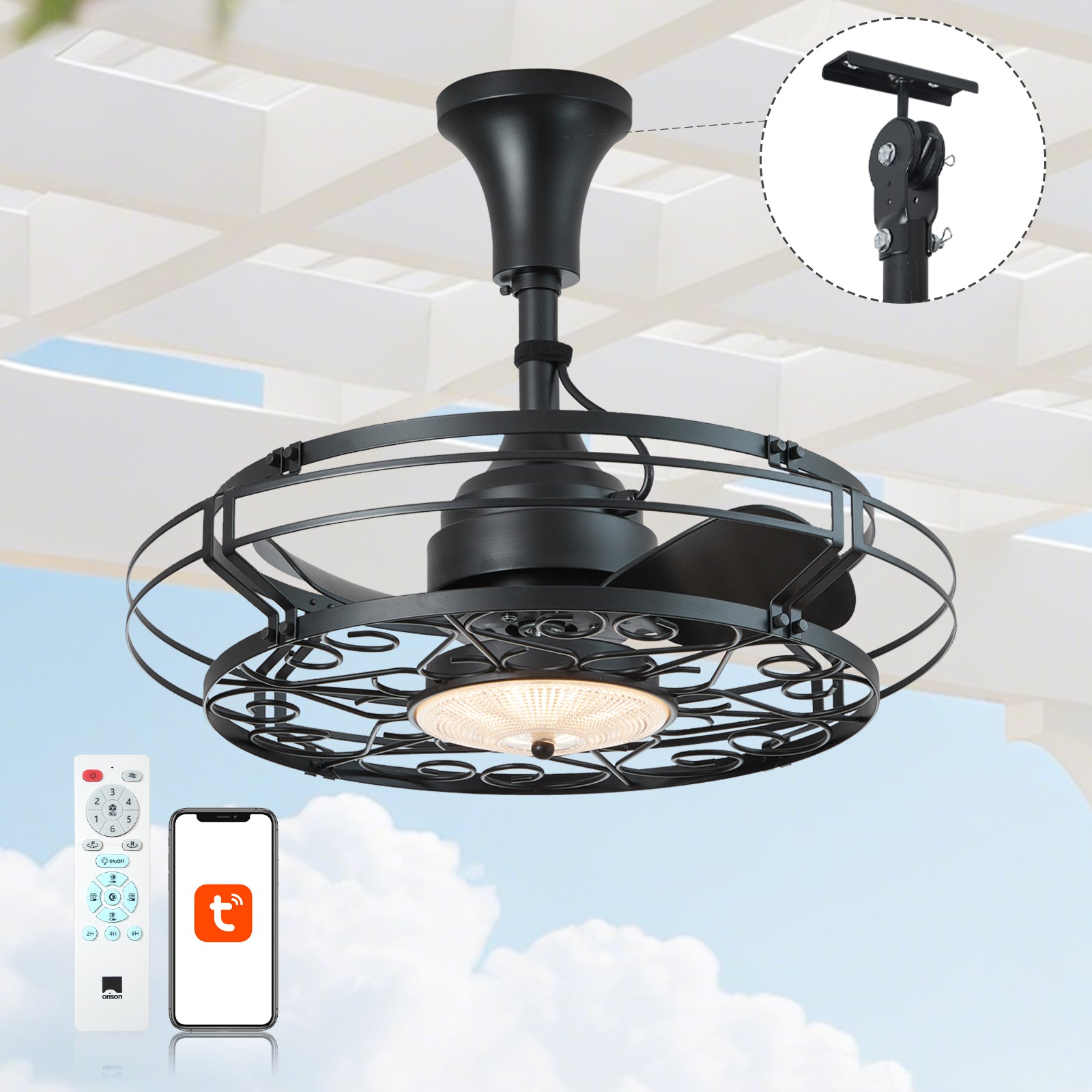
Voice-controlled ceiling fans promise convenience, but acoustic interference undermines both user experience and command recognition. In residential and semi-outdoor settings, unwanted fan noise raises the ambient sound floor and reduces speech-to-command accuracy; this matter grows acute for installations such as pergolas and terraces where owners select outdoor patio ceiling fans that must balance airflow and intelligibility. From a product strategy viewpoint, unresolved noise issues translate into returns, firmware patches, and brand frustration — outcomes no manufacturer or integrator wishes to absorb. CFM and blade geometry therefore are not merely performance metrics but determinants of a voice interface’s functional viability.

Primary noise sources in voice-control fan systems
One must separate noise origins to address them effectively. Typical contributors include:
- Mechanical vibration transmitted through mounting structures (resonance of canopy and joists).
- Aerodynamic noise from blade tip vortices and suboptimal blade pitch.
- Motor and bearing noise—older AC motors often generate tonal artifacts absent in modern BLDC designs.
- Control electronics and PWM switching harmonics that modulate perceived hiss at certain RPM ranges.
Understanding these sources allows specification teams to target mitigations that preserve required airflow while improving signal-to-noise ratio for voice control modules.
Practical noise-reduction strategies and trade-offs
There are four principal mitigation strategies, each with distinct engineering trade-offs:
- Aerodynamic refinement: optimizing blade pitch and tip shape reduces vortex shedding and broadband noise. Benefit: continuous reduction across speeds; cost: additional testing and prototyping.
- Motor selection and control: specifying brushless DC (BLDC) motors with low cogging torque and refined PWM filtering lowers tonal content. Benefit: quieter operation and higher efficiency; cost: higher BOM and control complexity.
- Mechanical isolation: damped mounts and rubberized canopies interrupt vibration transfer to the building structure. Benefit: immediate perceptual improvement; cost: potential effect on installation simplicity and canopy aesthetics.
- Signal-level approaches: local beamforming microphones and noise-robust ASR models increase recognition accuracy without altering the fan. Benefit: software fix with retrofit potential; cost: computational overhead and potential latency.
In practice, optimal solutions combine aerodynamic and motor-grade improvements with modest isolation and smarter voice front-ends — the whole system view yields best outcomes.
Real-world anchor: a porch retrofit case study
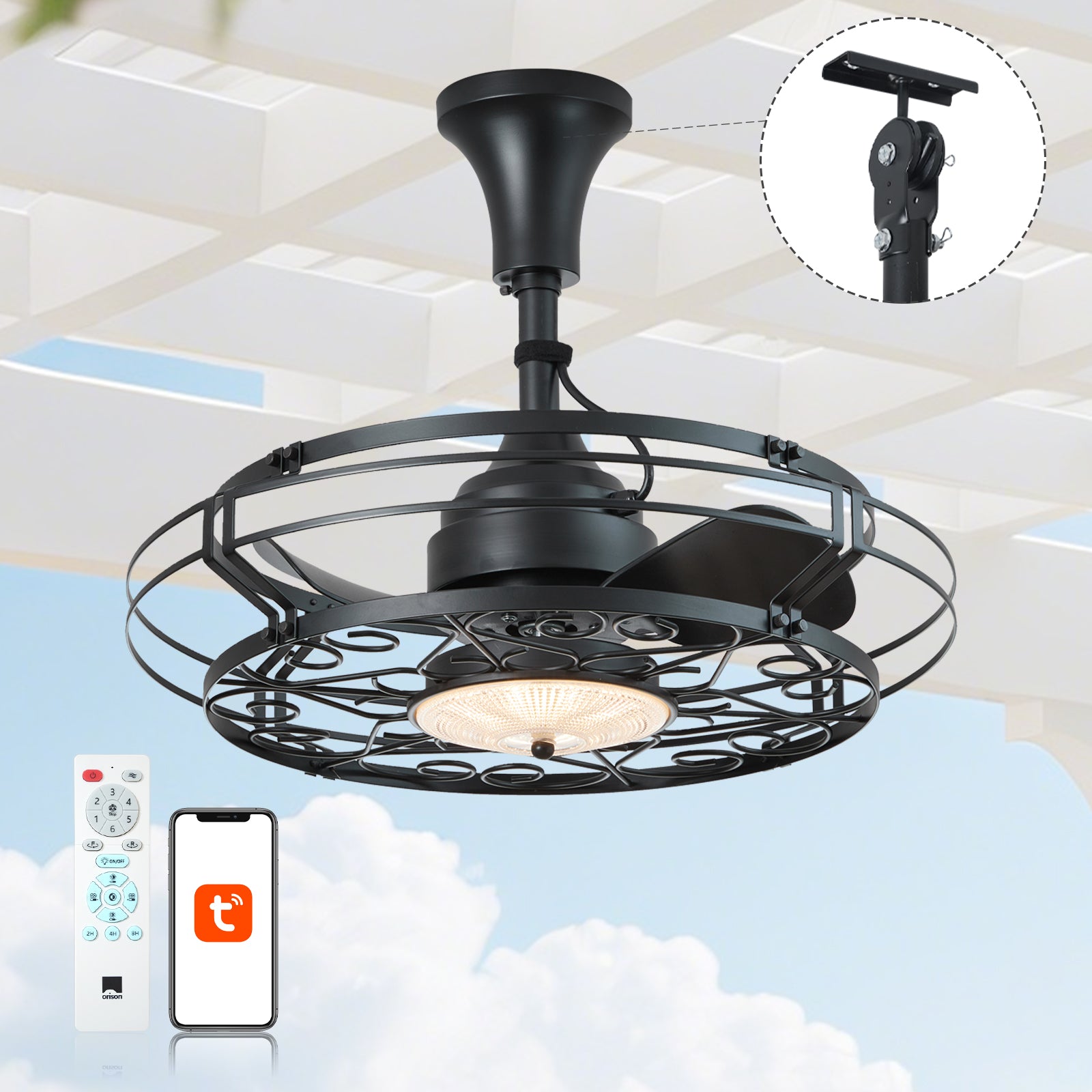
During a porch retrofit in Seattle, the installation team replaced an older high-RPM fan with a modern unit rated for outdoor use — specifically a porch fan with light — and simultaneously upgraded the microphone array for the voice assistant. The result was instructive: blade redesign and BLDC motor adoption reduced perceived noise; microphone beamforming compensated for residual ambient sounds. The household reported markedly fewer misrecognitions and a notable increase in evening usability. This anecdote complements broader industry experience: field installations reveal that combined mechanical and signal strategies outperform single-axis fixes.
Common procurement and installation mistakes
Frequent errors slow remediation and raise costs:
- Specifying only a low unit price without acoustic performance criteria; cheap blades often sacrifice blade pitch control.
- Neglecting mounting integrity — canopy isolation is cheap insurance against structural resonance.
- Assuming voice software alone will resolve hardware noise — software can compensate, but it cannot recover lost signal from a poorly designed fan.
Mitigate these by requiring test reports (SPL curves across RPM ranges), clear motor and bearing specifications, and on-site first-article verification with the target voice stack.
Three golden evaluation metrics for selection
When selecting a fan intended for voice-control environments, prioritize the following metrics:
- Acoustic profile: measured SPL across operational RPMs and an octave-band spectrum to reveal tonal peaks relevant to speech frequencies.
- Mechanical isolation rating: documented resonance damping and tested mounting procedures to prevent structure-borne noise.
- Integration readiness: presence of BLDC motor control, firmware hooks for low-noise modes, and tested compatibility with beamforming microphone arrays.
These metrics permit objective comparison between vendors and align procurement with user-facing performance expectations.
For projects that require balanced acoustic control and seamless smart-home integration, professional teams increasingly select suppliers who provide both engineering documentation and support during commissioning — testimony to the value of integrated solutions such as those offered by Orison. Quiet performance, verified.