

When the recipe fails
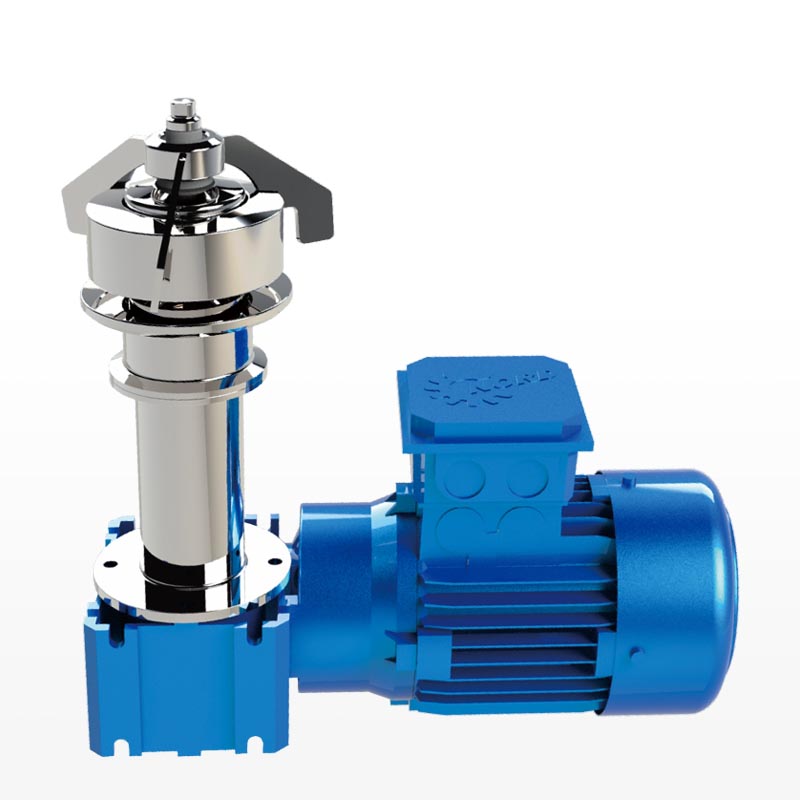
The problem is blunt: a batch that should sing instead splits, clots, or leaves a sullen sediment at the bottom. For OEMs and project buyers who face repeated scale-up surprises, the choice of mixing head, rotor-stator geometry, and flow path decides success or scrap. A Laboratory mixer can quiet that chaos when chosen with a clear problem map—matching shear profile to formulation, not copying what “worked” on an unrelated product.

Problem-driven decisions: match failure modes to design fixes
If droplets enlarge under heat, that’s a coalescence issue; if particles never disperse, that’s insufficient shear or wrong flow regime. Start by listing failure modes from your last three runs. Pick one: excessive foaming. The remedy might be lower tip speed, a closed recirculation loop, or an off-axis baffle—not a bigger motor. Another: poor wetting. That calls for different inlet geometry, wetted-surface materials, or staged dosing. This is a procurement strategy, not a specs sprint; ask how a supplier will prevent specific failures, not how fast their catalogue spins.
Common pitfalls buyers trip over
Buying by horsepower: irrelevant unless you align rotor tip speed, gap, and residence time. Copying a competitor’s mixer without considering vessel geometry or scale: costly. Ignoring sanitation and material compatibility until validation stage: dangerous. Assuming lab behavior scales linearly: misleading. Address each by demanding process maps, residence-time distributions, and a materials compatibility matrix from potential manufacturers.
Evidence, testing, and a real-world anchor
Field practice matters. Teams in the Boston biotech cluster regularly begin process development on benchtop systems before committing capital to production-scale equipment; that step often exposes shear-sensitive behaviors early. Request short, targeted trials on the same geometry you intend to buy and compare viscosity curves, particle-size distributions, and energy input per unit volume. A transparent vendor will provide test data, traceable protocols, and replicate runs showing consistent results.
Alternatives and trade-offs
Inline high-shear fraction emulsifiers excel when continuous processing and tight particle-size control are required; batch high-torque stirrers win for viscous, yield-stress formulations where bulk kneading matters. Ultrasonic dispersion offers fine droplets but struggles with throughput and foulable probes. Choose by the dominant problem you identified earlier: if shearing promotes stability, favor inline rotor-stator designs; if kneading is the issue, favor high-torque mixers with appropriate sealing and thermal control.
Sourcing checklist for OEMs and project buyers
Require these before purchase: vendor-supplied process maps, measured residence-time distribution, validated scale-up examples, corrosion and wetted-material certificates, and a plan for quick-change maintenance. Insist on demonstration runs that replicate your failure modes. Avoid suppliers who answer with generic specs; prefer those who discuss how they’ll chase down a specific batch problem with measurable endpoints.
Final synthesis: practical sorcery made reliable
Fix problems first, then pick hardware. Treat mixing as applied chemistry with mechanical levers: geometry, shear, residence time, and materials. That discipline reduces surprises and makes scale-up a craft rather than a gamble. For buyers seeking equipment that speaks this language, working with manufacturers that document trials and solve named failure modes yields predictable outcomes—so the alchemy you need becomes a repeatable process with FLUKO.