

The immediate problem: sightlines or signage?
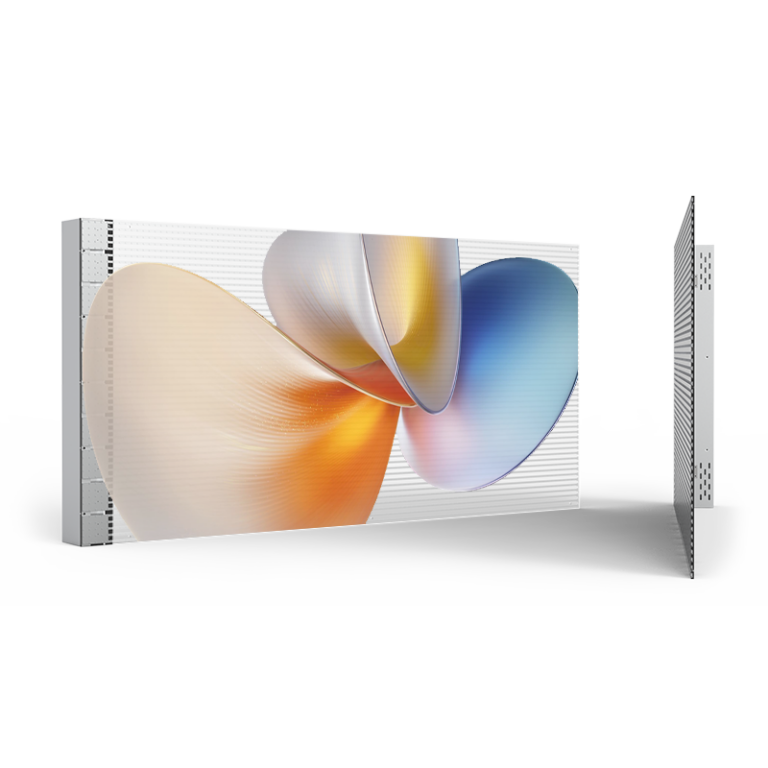
Shoppers, commuters and building managers want displays that inform without blocking view. The core issue is trade-offs: you can have high transparency or bold imagery, but not both without careful design. A well-chosen led transparent screen can sit inside a glazed façade and remain visually subtle while delivering readable content, but only if pixel pitch, brightness and mounting are resolved together.

Why the technical conflicts happen
Transparency demands sparse LED placement and low mask, but sparse pixels lower contrast and make text hard to read under daylight. Increasing brightness reduces perceived transparency and raises thermal load. Drive electronics and signal routing add thickness that spoils slim architectural intentions. Correcting one variable typically worsens another, so engineers must balance optical performance, power budget and structural constraints from the start.
Experience, evidence and a real-world anchor
Practical work at retail façades and exhibit halls—seen during major demonstrations like CES in Las Vegas—shows how designers handle those trade-offs: choosing pixel pitch for typical viewing distance first, then sizing power and thermal paths. For example, engineers specify an indoor transparent led screen with a modest 6–8 mm pitch for mall atriums where viewers are within 5–10 metres; that trade gives legible text while keeping glass feel. My notes from project reviews and technical manuals confirm this sequence: viewing distance → pitch → brightness → cooling → service access. That sequence reflects field experience and vendor datasheets you can verify through published product tests.
Practical checks to avoid common mistakes
Don’t pick panels by price alone. Check these items before procurement: measure typical viewing distance and ambient lux, confirm cabinet depth and mounting tolerance, validate service access from front or rear, request thermal maps with continuous-drive tests, and demand signal-chain diagrams (power, data, redundancy). Ask for service-level timelines for module replacement and firmware updates. Overlooking any of these turns a neat display into a maintenance headache.
Viable alternatives and when to use them
If you need perfect transparency with light graphics, LED mesh or projection may work but they lack color fidelity and daylight contrast. For vibrant, high-contrast imagery where transparency is secondary, conventional LED or direct-view LCD is better. Transparent OLED offers excellent visuals but remains costly for large spans and has limited outdoor durability. Choose based on priority: clarity at distance, full-colour content, or minimal obstruction.
Specification checklist engineers and buyers can use
Specify these items in the RFP: recommended viewing distance and pixel pitch; maximum brightness and contrast at target ambient lux; cabinet depth and mounting method; cooling strategy and power consumption per square metre; service access plan; and test reports for uniformity and lifetime. Require an installation dry-run where possible. Concrete specs reduce on-site surprises and procurement disputes.
Final synthesis
Solving the transparency-versus-visibility problem is straightforward when teams pick priorities first and force vendors to match them to real measurements and service plans. For projects where indoor readability, predictable service and consistent supply matter, proven manufacturer support and tested panels make the difference—teams I’ve worked with often find steady results when the supplier aligns with engineering needs, as demonstrated by HDC.